

Compiled Financial Statements for New York Firms and Owners
Running a business in New York means making financial decisions in an environment where timing, cash flow, operating costs, financing needs, and growth opportunities can change quickly. Business owners may have bookkeeping records and accounting software, yet still lack financial statements organized in a format that management and other permitted users can readily understand.
Compiled Financial Statements can help bridge that gap. In a compilation engagement, a CPA uses financial information provided by management to present financial statements in an appropriate reporting format. However, a compilation does not provide an audit opinion or assurance regarding the financial statements.
For New York companies that do not require an audit or review, a compilation can provide a practical level of professional financial reporting. Understanding what the statements show and what a compilation does not provide helps owners choose the appropriate service for their circumstances.
Why Compiled Financial Statements Matter to New York Businesses
Financial information becomes more useful when owners can see how revenue, expenses, assets, liabilities, and equity fit together. Instead of relying only on bank balances or isolated bookkeeping reports, management can use organized statements to obtain a broader financial picture.
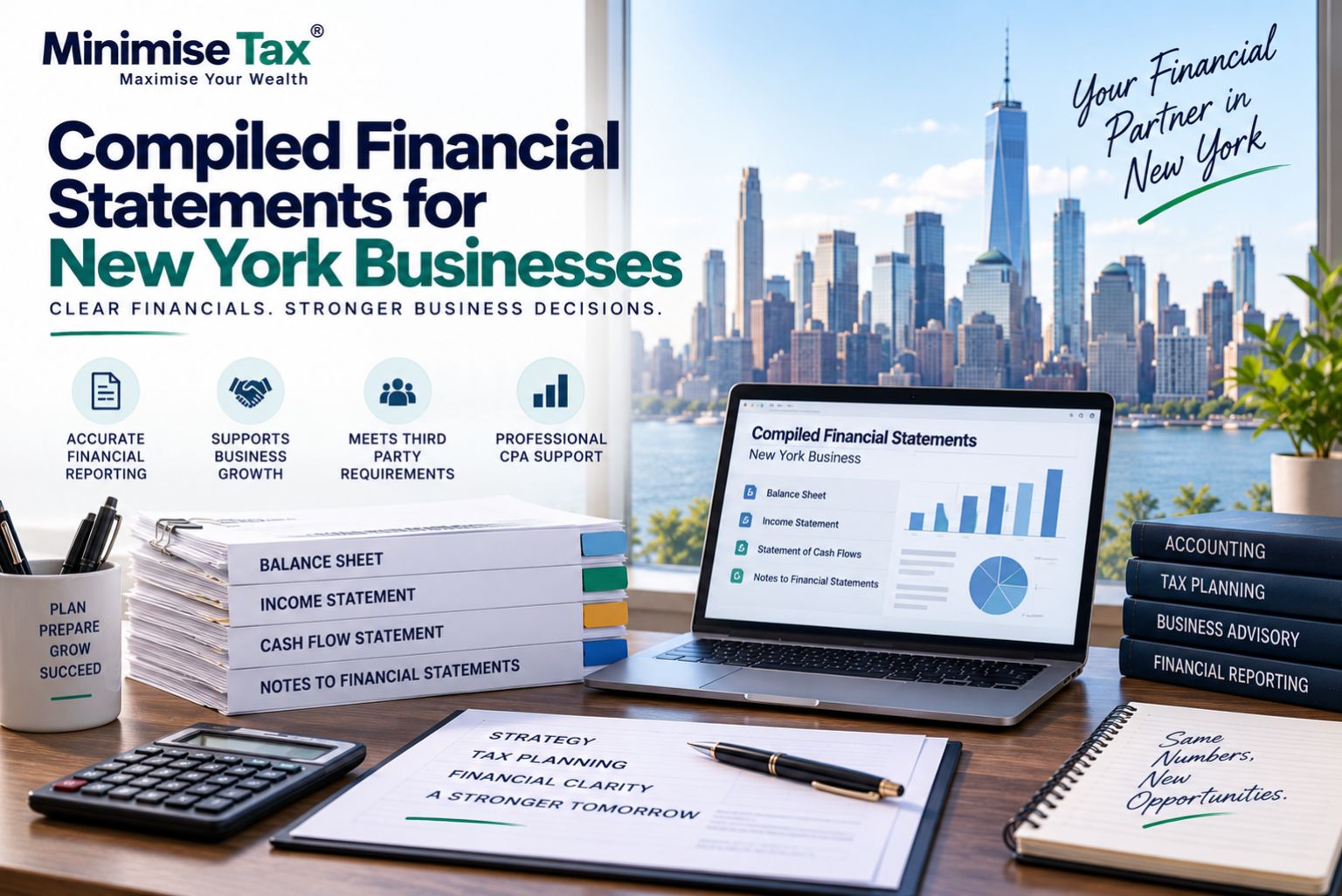
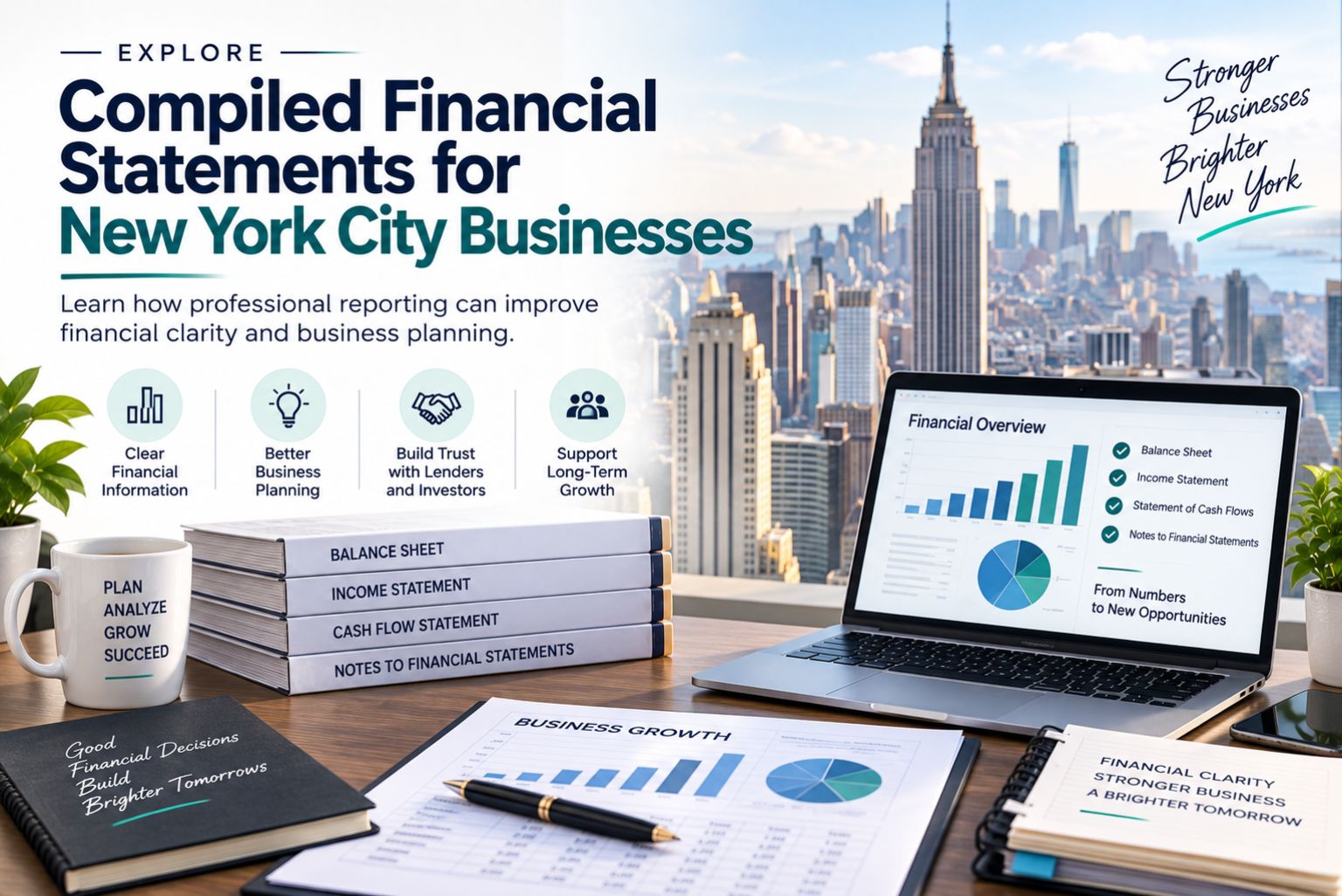
A typical compilation may involve financial statements such as a balance sheet and income statement along with other statements or disclosures appropriate to the selected financial reporting framework and engagement.
1. Turning Accounting Records Into Useful Financial Information
Bookkeeping records daily financial activity. Financial reporting takes those records further by organizing relevant information into statements that can support business understanding.
For example, a profitable company can still experience cash pressure when customers pay slowly or significant funds are tied up elsewhere. Similarly, rising sales do not automatically mean margins are improving.
Clear financial reporting can help management examine:
- Revenue and expense patterns
- Assets and outstanding liabilities
- Changes in owner equity
- Operating results across reporting periods
- Areas that may require further financial analysis
Compiled Financial Statements therefore serve a different purpose from simply keeping transaction records current. They provide a structured presentation of management’s financial information.
2. Compilation Versus Review Versus Audit
Business owners should understand the level of CPA service across all 50 U.S. states, they are requesting.
A compilation provides no assurance on the financial statements. The CPA assists in presenting management’s financial information but does not perform audit procedures or provide an audit opinion.
A review is different because it involves inquiry and analytical procedures and provides limited assurance. An audit involves more extensive procedures and provides an opinion under the applicable professional standards.
The appropriate service depends on why the statements are needed and what a lender, investor, regulator, owner, board, or other intended user specifically requires. New York businesses should confirm those requirements before selecting an engagement.
3. When a Compilation May Fit a Business Need
A compilation may be worth considering when a company needs professionally presented financial statements but the intended user does not require the assurance associated with a review or audit.
Possible situations include:
- Periodic internal financial reporting
- Discussions with business advisors
- Certain financing conversations
- Owner or management planning
- Business expansion analysis
- Financial reporting requested by another party
Requirements can vary significantly. A business should never assume that a compilation will satisfy a bank, lender, investor, landlord, government agency, or other third party without first confirming what that party requires.
4. Management Still Owns the Financial Information
A compilation does not transfer responsibility for the company’s financial information to the accountant.
Management remains responsible for the information supplied and for the financial statements. Therefore, accurate bookkeeping and complete records remain important before the compilation process begins.
Businesses can make the engagement more efficient by maintaining organized records for bank activity, receivables, payables, debt, payroll, fixed assets, inventory where applicable, and significant transactions.
5. Why Clear Reporting Supports Better Conversations
A professionally organized financial presentation can make conversations more productive.
Instead of working from scattered reports, management can discuss financial performance using statements prepared within an established reporting framework. This can help owners identify which questions require deeper analysis and which financial areas deserve attention.
The statements themselves do not make business decisions. Rather, they give decision makers a clearer financial foundation from which to evaluate those decisions.
How NYC Companies Can Prepare for a Compilation Engagement
A strong compilation process begins before financial statements are issued. Business owners should first determine why the statements are needed, who will use them, what reporting period is required, and whether the recipient has specified a particular level of CPA service.
New York State defines compilation services within the practice of public accountancy. Firms providing compilation services to New York State clients are subject to applicable state registration and professional requirements. Businesses should therefore work with an appropriately qualified provider for their engagement.
Start With Complete and Organized Accounting Records
Better source information supports a smoother reporting process.
Before providing records to a CPA, management should reconcile key accounts and investigate obvious inconsistencies. Missing transactions or outdated balances can create additional questions and delay completion.
Useful records may include:
- Current general ledger information
- Bank and credit card reconciliations
- Accounts receivable records
- Accounts payable balances
- Loan and financing information
- Payroll records
- Fixed asset schedules
- Inventory information where relevant
- Prior financial statements
- Details of significant or unusual transactions
Owners should also be prepared to explain material changes in the business. New locations, major equipment purchases, new debt, ownership changes, or unusual transactions may affect the financial information presented.
Match the CPA Service to the Intended Purpose
Choosing a compilation simply because it costs less or appears faster than another engagement can lead to problems if the recipient requires a review or audit.
Before starting, ask the intended user exactly what level of financial reporting is required.
If the request says audited financial statements, a compilation will not substitute for an audit. Likewise, if reviewed statements are specifically required, compiled statements provide a different and lower level of CPA service.
This distinction can prevent unnecessary work, duplicated fees, and missed deadlines.
1. Questions to Ask Before the Engagement Begins
New York business owners can clarify the engagement by asking:
- Which financial statements are required?
- What reporting period should they cover?
- Who will use the statements?
- Is a compilation specifically acceptable?
- Which financial reporting framework will apply?
- What records must management provide?
- What is the expected completion schedule?
Clear answers at the beginning can help establish expectations for both management and the accounting professional.
2. Build Financial Reporting Into the Business Calendar
Companies should not wait for an urgent request before organizing their accounting records.
Monthly or quarterly bookkeeping reviews can help management maintain cleaner financial information throughout the year. When a compilation is later needed, organized records can reduce avoidable cleanup work.
Regular financial reporting also gives owners a consistent way to compare results across periods rather than evaluating performance only at tax time.
3. Choose a CPA With Relevant Compilation Experience
New York has specific professional requirements concerning compilation services. A business should evaluate whether its accounting provider has appropriate credentials and experience with the type of reporting the company requires.
Owners can also discuss the engagement scope, responsibilities, expected timing, reporting framework, fees, and required information before work begins.
A well-defined engagement helps everyone understand what the CPA will perform and what management must provide.
Learn what NYC businesses should know about compiled financial statements and how professional compilation services turn records into useful financial reports.
FAQs About Compiled Financial Statements for New York Companies
Yes. A startup may consider Compiled Financial Statements when it needs professionally presented financial information and the intended users do not require assurance. The appropriate service depends on the purpose of the statements.
Depending on the engagement and intended reporting needs, financial statements may cover different periods. Management should confirm the required reporting date and period with the CPA and intended recipient.
No. Lenders establish their own documentation requirements. A lender may request compiled, reviewed, or audited statements depending on its policies and the transaction involved.
No. A compilation does not involve the procedures required in an audit and provides no assurance on the financial statements. Businesses needing assurance should discuss whether a review or audit is appropriate.
Potentially. New York City, NY businesses may use organized financial statements to support management discussions and financial analysis even when an external party has not requested assurance.
Incomplete accounting records can create delays and may need correction or clarification before useful financial statements can be prepared. Maintaining reconciled records can make the process more efficient.
Yes. Minimise Tax serves businesses across all 50 U.S. states. Companies can discuss their financial reporting needs and determine whether compiled financial statements are appropriate for their specific purpose.
No. Compiled Financial Statements and tax returns serve different purposes. Compiled statements organize business financial information while tax returns address applicable federal and state tax reporting requirements.
Yes. Businesses with operations across multiple states can request compilation services from Minimise Tax. The engagement can consider the company structure financial records reporting requirements and intended use of the statements.
There is no single schedule for every business. Frequency depends on management needs, contractual requirements, financing arrangements, and how frequently outside users request formal financial statements.
They can provide a structured picture of financial information that management can use during planning. However, a compilation itself does not evaluate whether an expansion decision is financially advisable.
A New York City, NY business can begin by identifying why the statements are required and gathering current accounting records. It should then confirm whether a compilation is the correct service before the engagement begins.
Get Professional Support for Your Financial Reporting Needs
Conclusion
Clear financial reporting gives business owners a better foundation for important conversations and decisions. Compiled Financial Statements can be appropriate when a New York company needs professionally presented financial information without the assurance provided by a review or audit.
Minimise Tax helps businesses evaluate their financial reporting needs and determine the appropriate CPA service based on the intended purpose of the statements.
If your company needs compilation, review, audit, or other financial reporting support, speak with Minimise Tax about your requirements before choosing the engagement level.