

Tax & Accounting Services in Atlanta, GA for Business Growth
Running a business in Atlanta means making financial decisions in an environment where cash flow, taxes, payroll, reporting, compliance, and growth planning can all affect the bottom line. Yet many business owners still treat accounting as something that happens after the work is done.
That approach can leave valuable financial information sitting unused.
The right Tax & Accounting Services in Atlanta, GA can turn financial records into practical business intelligence. Instead of simply recording yesterday’s transactions, a strategic accounting approach helps business owners understand where money is going, anticipate obligations, identify opportunities, and make decisions with greater confidence.
This guide explains how modern tax and accounting support can become a genuine finance advantage for Atlanta businesses.
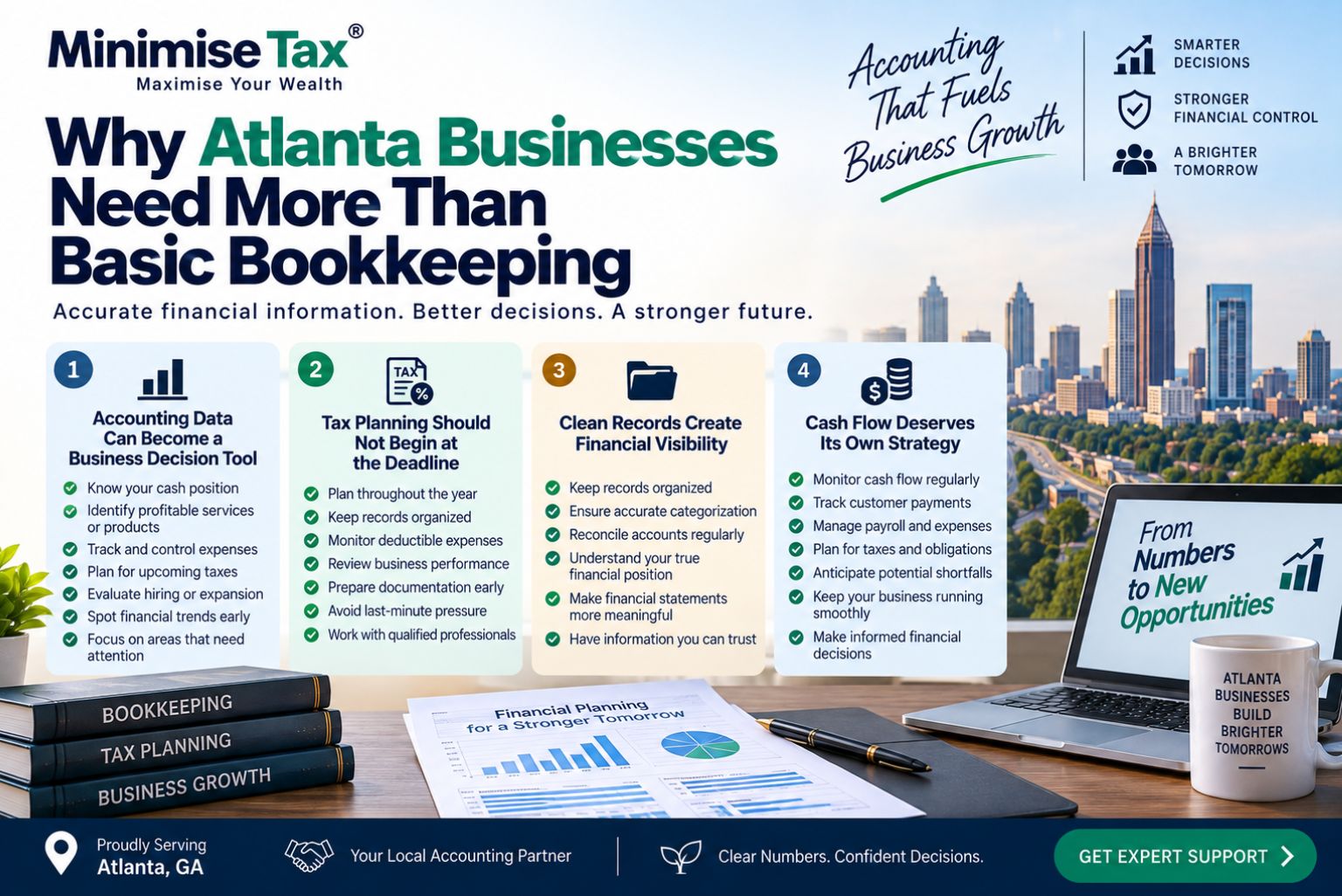
Why Atlanta Businesses Need More Than Basic Bookkeeping
Accounting is often viewed as data entry, but accurate financial information can influence almost every important business decision. Whether a company is expanding, hiring, purchasing equipment, managing inventory, or preparing for tax season, reliable numbers provide the foundation for better choices.
1. Accounting Data Can Become a Business Decision Tool
A strong accounting process should help answer practical questions:
- How much cash is actually available?
- Which services or products generate the strongest margins?
- Are operating expenses increasing too quickly?
- What upcoming tax obligations should be planned for?
- Can the business comfortably support another employee?
- Is revenue increasing while profitability is falling?
- Which areas deserve closer financial attention?
When financial information is organized and reviewed consistently, owners can move from reactive financial management to proactive planning.
2. Tax Planning Should Not Begin at the Deadline
Waiting until tax filing time to think about taxes can create unnecessary pressure. Tax planning is more useful when it becomes part of ongoing financial management.
For an Atlanta business, proactive planning can involve reviewing business performance, maintaining organized records, monitoring deductible expenses, preparing documentation, and coordinating financial information before deadlines approach.
Tax rules and individual circumstances vary, so businesses should work with qualified professionals for advice specific to their situation.
3. Clean Records Create Financial Visibility
Disorganized records make it difficult to understand the real condition of a business. Accurate categorization and timely reconciliation can make financial statements more meaningful.
The goal isn’t simply to have books that look complete. The goal is to have financial information that can be trusted when a decision matters.
4. Cash Flow Deserves Its Own Strategy
A profitable business can still experience cash-flow pressure. Timing matters: customer payments, payroll, supplier invoices, taxes, subscriptions, loans, and other obligations may not occur at the same time.
Regular cash-flow monitoring can help owners anticipate pressure rather than discovering it after the problem appears.
How the Right Accounting Partner Can Create a Finance Advantage
The value of professional accounting isn’t limited to preparing reports. The strongest relationship connects financial information with the owner’s broader business objectives.
1. Build a Financial System Around Your Goals
Every business has different priorities. A growing professional-services company may need better receivables visibility, while a retailer may focus heavily on inventory and margins.
Useful accounting support should therefore be connected to the business model.
An effective approach can include:
- Bookkeeping and transaction organization
- Financial statement preparation
- Tax preparation and planning support
- Accounts receivable and payable monitoring
- Payroll-related accounting coordination
- Budgeting and forecasting
- Expense and profitability analysis
- Management reporting
- Year-round financial organization
The objective is simple: make important financial information easier to understand and use.
2. Choose Services That Match the Stage of Your Business
A startup, established local company like Minimise Tax, and rapidly expanding organization rarely have identical accounting needs.
Startups Need Structure Before Complexity Arrives
New businesses benefit from establishing organized financial processes early. Separating business and personal transactions, maintaining appropriate records, tracking expenses, and establishing a consistent bookkeeping routine can create a stronger foundation.
As the company grows, that foundation makes it easier to add more sophisticated reporting and planning.
Established Companies Need Better Financial Visibility
For established Atlanta businesses, the challenge may not be a lack of data. It may be having too much information without enough insight.
Monthly financial reporting, cash-flow analysis, budget comparisons, and profitability reviews can help turn raw numbers into useful management information.
Growing Companies Need Scalable Accounting
Expansion can introduce new employees, locations, customers, vendors, equipment, financing, and administrative responsibilities.
Accounting processes that worked for a smaller operation may become inefficient as complexity increases. A scalable approach helps businesses maintain financial control while they grow.
What Should You Look for in Tax & Accounting Services in Atlanta, GA?
Choosing an accounting provider should involve more than comparing prices.
Look for a service approach that emphasizes:
- Accuracy and organization
- Clear communication
- Responsive support
- Proactive tax planning
- Useful financial reporting
- Technology and efficient workflows
- Understanding of your business goals
- Transparent service expectations
The best provider isn’t necessarily the one offering the longest list of services. It is the one whose expertise aligns with your actual financial needs.
Make Your Financial Information Work Harder
Financial statements should not simply be produced and forgotten. Business owners can use them to identify patterns and ask better questions.
For example, if revenue rises but cash declines, the issue may deserve investigation. If one expense category grows faster than sales, management may need to understand why. If customer balances remain outstanding longer, receivables management may require attention.
This is where accounting becomes a strategic business resource rather than an administrative obligation.
Explore professional tax and accounting support designed around your Atlanta business goals and discover where your current financial process can become more efficient, organized, and growth-ready.
Frequently Asked Questions About Tax & Accounting Services
Tax services generally focus on tax preparation, planning, and related obligations, while accounting covers a broader financial picture. Businesses may benefit from using both functions together for better financial organization.
Yes. Small businesses often have limited internal financial resources, making organized bookkeeping, reporting, and tax planning particularly valuable for maintaining visibility and reducing avoidable administrative problems.
Tax planning is generally more useful when performed throughout the year, rather than only immediately before a filing deadline. The appropriate timing and strategies depend on the business and its circumstances.
Businesses in Atlanta, GA, also require organized accounting, tax compliance, documentation, and financial planning, although the applicable rules and tax systems differ from those in Georgia and the United States.
They can provide better visibility into receivables, payables, expenses, margins, and financial timing. That information can help management identify potential cash-flow issues earlier and plan accordingly.
There is no universal answer, but establishing organized financial processes early can prevent records from becoming difficult to reconstruct later. The right level of professional support depends on the company's size and complexity.
Common reports include the income statement, balance sheet, and cash-flow information. Additional management reports may be useful depending on the business model and decision-making needs.
Accurate financial information can help owners evaluate profitability, expenses, cash requirements, budgets, and investment decisions. Better information can support more informed growth planning.
No. Tax preparation generally involves preparing and filing required returns, while tax planning looks ahead and considers how financial decisions may affect tax obligations.
The appropriate frequency depends on the business. Many organizations benefit from regular monthly reviews, while more complex or rapidly changing businesses may require more frequent monitoring.
Turn Accounting Into Your Finance Advantage
Conclusion
For Atlanta businesses, accounting doesn’t have to be a backward-looking administrative task. With the right approach, financial information can become a resource for better planning, stronger cash-flow awareness, smarter tax preparation, and confident business decisions.
The most valuable Tax & Accounting Services in Atlanta, GA are those that fit the company’s actual needs and help transform financial data into actionable insight.
Ready to Build a Stronger Financial Foundation?
If your business needs greater financial clarity, organized records, proactive tax planning, or better reporting, consider evaluating your current accounting process. The right financial system today can make tomorrow’s business decisions significantly easier.